
Local governments across the country struggle to bridge the gap between ambitious strategic visions and the complex realities of departmental silos, shifting political landscapes and limited resources. The challenge is turning a plan into tangible community results.
This guide provides all you need to know about local government strategic planning, then equips you with the processes, components and solutions to overcome common implementation challenges and drive community impact.
In This Article
- Introduction to Local Government Strategic Planning
- The Purpose of Strategic Plans in the Public Sector
- A Look at the Municipal Planning Process
- Key Components of a Strategic Plan
- Three Benefits of Strategic Planning in Local Government
- Overcoming Challenges in Strategic Plan Implementation
- Successful Strategic Planning in Action
Introduction to Local Government Strategic Planning
A strategic plan for local governments is a document that outlines a municipality’s vision for the future and establishes the goals, priorities and action steps needed to achieve that vision. Unlike day-to-day operational planning, strategic planning focuses on long-term direction — typically spanning three to five years or more — and addresses the most pressing needs facing your community.
A strategic plan for local governments must balance multiple competing interests while allocating limited resources effectively. You’re managing internal departmental needs along with constituent expectations, regulatory requirements and evolving community demographics. Whether overseeing infrastructure improvements, economic development initiatives or public health planning efforts, your strategic plan serves as the foundational framework that guides decision-making across your organization.
Strategic planning is particularly critical for municipalities because of the unique accountability structure inherent in public sector work. Every decision you make affects real people in your community, and taxpayers rightfully expect transparency about how their money is spent and what results are achieved.
Effective solutions for local government can help align goals and resources to meet these expectations.
The Purpose of Strategic Plans in the Public Sector
These plans serve many essential functions in local government operations. Understanding their purposes helps you build a plan that delivers real value.
Providing a Community Roadmap
At their core, strategic plans function as a community roadmap that translates abstract aspirations into concrete direction. Your plan documents where your municipality currently stands, where you want to go and how you’ll get there. This roadmap gives everyone in your organization — from department heads to frontline staff — a shared understanding of priorities and direction.
The roadmap also extends beyond internal operations. When residents, businesses and community organizations understand your strategic priorities, they can align their own efforts with municipal goals. This creates powerful synergies. For example, when your strategic plan identifies affordable housing as a priority, developers and nonprofits can tailor their proposals to support that objective.
Aligning Resources and Establishing Accountability
Plans bring order to what might otherwise become a chaotic allocation process. By establishing clear priorities upfront, your plan helps you make difficult budgeting decisions with confidence. When department requests exceed available funding, you can evaluate proposals against strategic priorities rather than political pressure or whoever makes the loudest case.
The plan also creates accountability structures that keep initiatives on track. When you assign ownership to specific goals and establish completion timelines, you make it clear who is responsible for what. This accountability extends vertically through your organization and horizontally across departments, ensuring that cross-functional initiatives do not fall through the cracks.
Improving Transparency and Government Effectiveness
When you publish your plan and provide regular updates on goal achievement, you demonstrate that tax dollars are being used purposefully and effectively. This transparency builds public trust and can even improve your municipality’s bond ratings.
Beyond transparency, strategic plans make government more effective. They force you to think systematically about complex challenges rather than reacting to whatever crisis surfaces today. This forward-looking approach helps you identify potential problems before they become emergencies and positions your municipality to capitalize on emerging opportunities.
With this foundation in place, you’re ready to explore the municipal planning process that brings these plans to life.
A Look at the Municipal Planning Process
Creating an effective strategic plan requires a structured approach. While every municipality adapts the process to fit local needs, a successful municipal planning strategy follows several key phases:
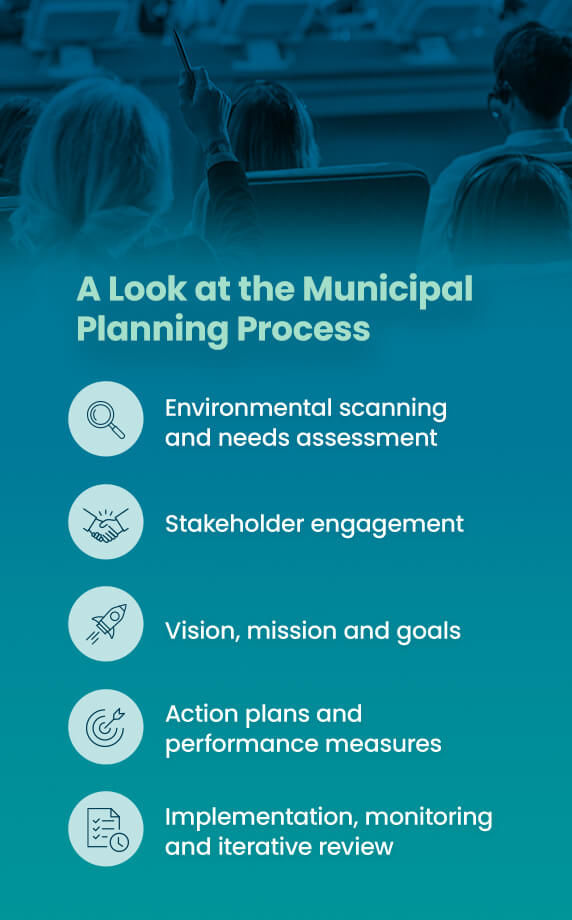
- Environmental scanning and needs assessment: Start by gathering data about your community’s current state. This includes demographic trends, economic indicators, infrastructure conditions and resident satisfaction surveys. You’ll also want to assess external factors like state and federal policy changes, regional economic trends and technological developments that might impact your municipality. For health departments, this phase includes community health status monitoring and identifying priority health concerns.
- Stakeholder engagement: Effective plans require input from diverse voices. Engage elected officials, department heads, frontline staff, community organizations, business leaders and residents through town halls, focus groups, surveys and advisory committees. This engagement ensures your plan reflects actual community needs. Local governments overseeing strategic planning in public health can include healthcare providers, community organizations and residents in these discussions.
- Vision, mission and goals: With data and stakeholder input in hand, articulate your municipality’s ideal future state, your fundamental purpose and the major outcomes you’ll pursue. These elements provide the conceptual framework for everything that follows. If public health planning is a priority, your vision might include specific community health outcomes you aim to achieve.
- Action plans and performance measures: Break down each strategic goal into specific objectives, action steps, responsible parties, timelines and success metrics. This is where strategy becomes operational. Ready-to-use strategic planning templates can provide a helpful starting framework for this step. For municipalities with health departments, this includes establishing public health key performance indicators (KPIs) and health initiative-tracking systems to monitor progress on community health strategy goals.
- Implementation, monitoring and iterative review: Launch your plan and establish regular review cycles — typically monthly or quarterly — to assess progress, identify obstacles and make adjustments. Strategic plans work best when they are living documents that evolve as circumstances change.
Throughout this process, incorporate best practices, like ensuring inclusive community involvement that reflects diverse demographics and perspectives. Build adaptability into your plan so you can respond to unexpected challenges without abandoning strategic priorities. Remember that strategic planning is an ongoing discipline.
Key Components of a Strategic Plan
Effective strategic plans share several essential elements that work together to create a coherent, actionable framework. Understanding these components helps you build a plan that drives results.
The Vision Statement
Every plan needs a clear vision statement that paints a compelling picture of your municipality’s desired future. This aspirational statement — typically one to three sentences — inspires stakeholders and provides a north star for decision-making. Your mission statement complements the vision by articulating your organization’s fundamental purpose and the unique value you provide to residents.
Add your strategic goals, which represent the major outcomes you’re committed to achieving within your planning timeframe. To maintain focus, limit yourself to three to seven ambitious yet achievable high-level goals that connect clearly to your vision and mission.
Objectives and Action Plans
Beneath strategic goals sit objectives and action plans that translate broad intentions into specific deliverables. Objectives break goals into manageable chunks, while action plans detail the concrete steps, responsible parties, timelines and resources required. This is where strategic thinking meets operational reality.
For example, if improving community health is a strategic goal, your objectives might address specific health department data tracking systems, public health compliance strategies and processes for measuring community health outcomes.
Monitoring and Continuous Improvement
A key component of effective plans is the ability to turn data into insight. This typically requires actionable strategic dashboards that:
- Display real-time progress
- Identify trends
- Flag initiatives that are off track
For health departments tracking multiple initiatives, dashboards might consolidate public health data management metrics alongside other municipal priorities.
Finally, strategic plans emphasize monitoring, evaluation and flexibility. Build in regular review cycles to assess progress and identify necessary adjustments. The best plans adapt to changing circumstances while maintaining strategic focus. This iterative approach ensures your plan remains relevant even as community needs and external conditions evolve.
Three Benefits of Strategic Planning in Local Government
When done well, strategic planning delivers tangible benefits that justify the time and resources invested. Here are three primary advantages that municipalities consistently realize.
1. Improved Resource Management and Decision-Making
Strategic planning prompts you to make explicit choices about resource allocation before budgets are set and projects are launched. This focused approach ensures resources flow to initiatives positioned to deliver meaningful results.
You can also make data-driven decisions about whether to continue, adjust or discontinue existing programs based on their contribution to strategic goals. Understanding the ROI of effective strategic execution helps you justify resource allocation decisions to elected officials and taxpayers alike.
2. Enhanced Community Engagement and Service Delivery
Strategic plans that involve authentic community input create stronger connections between municipalities and residents. When people see their priorities reflected in official plans and can track progress toward shared goals, they become more engaged in civic life. This engagement often translates into:
- Increased volunteerism
- Higher participation in public meetings
- Stronger support for necessary tax increases or bond issues
The planning process also improves service delivery by giving you an opportunity to view your municipality through residents’ eyes. Instead of organizing around internal departmental structures, you start thinking about the holistic experience of living in your community. This perspective helps you identify service gaps and opportunities to coordinate across departments for better outcomes.
For municipalities managing public health initiatives, this means better coordination between community health improvement planning and other strategic priorities.
3. Increased Government Accountability and Transparency
Strategic plans create accountability by establishing clear expectations and measurable results. When you publicly commit to specific goals and regularly report progress, you demonstrate responsible stewardship of public resources. This transparency builds trust with constituents and can improve your municipality’s reputation with credit rating agencies, potentially lowering borrowing costs.
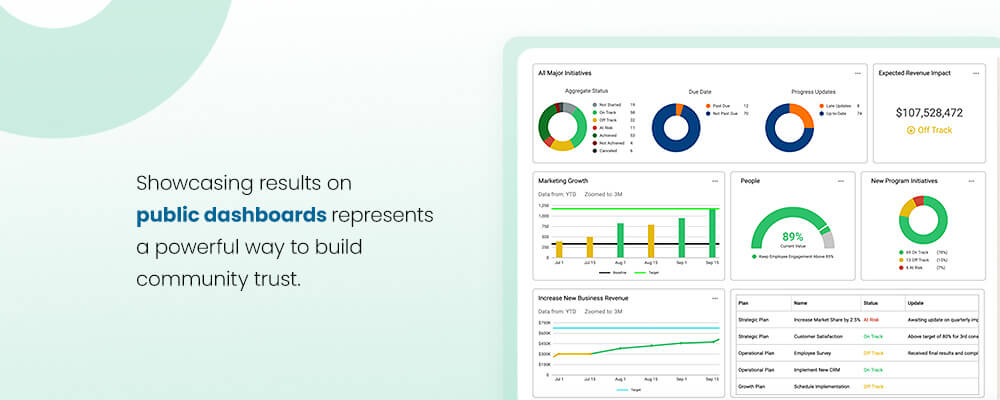
Showcasing results on public dashboards represents a powerful way to build community trust. When residents can view real-time progress on infrastructure projects, economic development initiatives, health initiative tracking and other strategic priorities, they gain confidence that their government is working effectively on their behalf. This visibility also creates healthy internal accountability, as departments know their performance is publicly visible.
Overcoming Challenges in Strategic Plan Implementation
Despite best intentions, many municipalities struggle. The scale of the implementation challenge becomes clear when you consider that 50% of surveyed communities do not have completed strategic plans. For those that do, execution remains the primary hurdle.
Consider these common implementation obstacles:
- Resource constraints: Municipal budgets are tight, and staff are already stretched thin managing day-to-day operations. Finding the capacity to pursue new strategic initiatives while maintaining existing services requires difficult tradeoffs.
- Departmental silos: Different departments often operate independently with their own systems, processes and priorities. This fragmentation makes it nearly impossible to track progress on cross-functional initiatives or understand enterprise-wide execution.
- Political transitions: When elected officials change, new administrations sometimes abandon previous strategic priorities in favor of their own agendas, creating discontinuity that undermines long-term planning.
- Data collection challenges: Gathering updates on dozens or hundreds of initiatives across multiple departments becomes a manual, time-consuming process. By the time you compile the information, it’s often outdated and no longer useful for decision-making. Health departments face particular challenges with public health data management when systems do not integrate well.
- Lack of accountability: Without clear ownership and automated tracking, strategic initiatives quietly drift off course with no one noticing until it’s too late to correct.
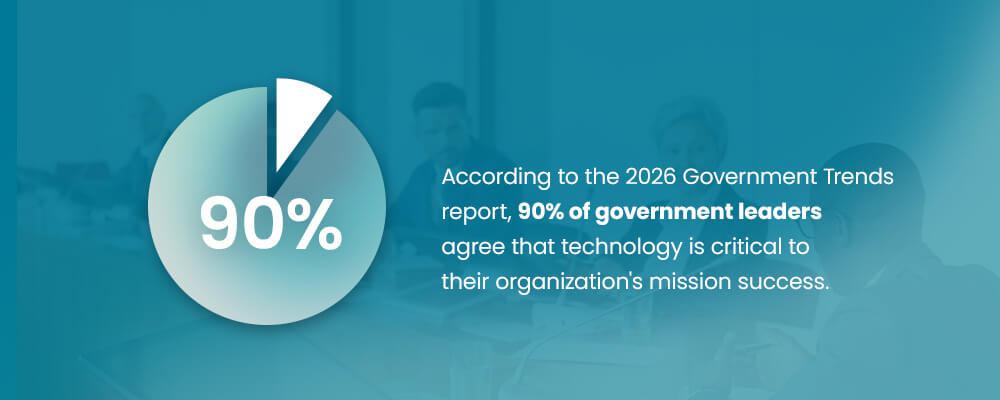
The solution lies in adopting new tools and operating models designed specifically for strategic execution. According to the 2026 Government Trends report, 90% of government leaders agree that technology is critical to their organization’s mission success. Modern integrated plan management platforms automate update requests, consolidate data from across departments and provide real-time visibility into plan performance.
Building a high-performance government depends on translating strategic plans into action. With the right execution framework, municipalities are overcoming these traditional barriers and achieving impressive results.
Successful Strategic Planning in Action
Strategic planning delivers results when municipalities commit to thorough planning and disciplined execution. Here are two examples of local governments that transformed their strategic planning processes with measurable outcomes.
From Confusion to Clarity
The City of Pittsburg, a vibrant Northern California community with over 76,000 residents, struggled with unclear accountability, ineffective progress documentation and directors being overburdened by status inquiries. The city implemented an integrated plan management platform that streamlined the previously laborious process of gathering data and reporting outcomes.
Updating goals now takes only minutes and connects directly to publicly accessible dashboards on the city’s website, ensuring the community has real-time visibility into results. The city shares these dashboards across social media platforms, in City Council meetings and during the Mayor’s State of the City Address.
This transformation led to:
- Effective handling of constituent inquiries by the City Council.
- Improved holistic progress tracking and identification of areas for action.
- Increased community trust and sustained strategic focus through election cycles.
Tracking Progress at Scale
On Florida’s west coast, Citrus County aimed to streamline strategic planning and increase public transparency for its 160,000 residents, but lacked an efficient system to track progress on community development initiatives. By implementing integrated plan management solutions, the county achieved remarkable execution momentum:
- Year 1: In the first 12 months, the county completed 14 project phases — seven linked to strategic priorities — totaling 94 unique milestones.
- Year 2: That momentum accelerated, with 39 phases completed and 173 activities advancing strategic goals.
- Year 3: In the first quarter of the third year, the county delivered 17 additional project phases and 66 activities.
All told, Citrus County completed 70 project phases and 333 distinct action steps during the first 30 months of execution. Staff now manage over 619 activities across 114 ongoing projects, demonstrating how the right execution framework enables municipalities to operate at scale while maintaining visibility and accountability.
Get Started With AchieveIt
A dynamic, executable strategic plan provides the framework for community development and transformation. When you invest in planning and execution infrastructure, you set your municipality up for long-term success.
AchieveIt provides integrated plan management solutions designed specifically for local governments. Our platform connects your strategic vision to daily operations, automates update requests across departments and delivers real-time visibility into plan performance through customizable dashboards. With built-in accountability structures and streamlined reporting, you’ll spend less time chasing updates and more time making decisions that move your community forward.
Transform your strategic plan from a static document into a dynamic execution tool. Request a demo today to see how AchieveIt helps municipalities connect, manage and execute their most important plans and initiatives.