
People who handle strategic planning and performance management at state or local health departments must deal with the constant challenge of improving community health while managing limited resources and competing priorities. Tracking health outcomes determines whether aspirational plans translate into measurable improvements.
Systematically monitoring indicators like disease rates, vaccination coverage and health behaviors provides visibility into which programs deliver results and which need adjustment. These insights drive better resource allocation, stronger accountability and more informed decision-making.
Public health leaders who lack reliable tracking systems operate in the dark. Updates get lost in email chains, data sits in disconnected spreadsheets and teams struggle to answer simple questions about program performance. The manual effort required to chase down information takes time away from mission-critical work.
Health departments have an excellent opportunity to deliver better outcomes for the communities they serve by using technology and strategic planning to move from reactive data collection to proactive performance management.
In This Article
- Understanding Public Health KPIs
- The Value of Data Tracking in Public Health
- Measuring Progress on Public Health Initiatives
- Data Tracking Tools and Technologies
- Challenges in Tracking Community Health Outcomes
- Case Studies — Effective Tracking in Action
Understanding Public Health KPIs
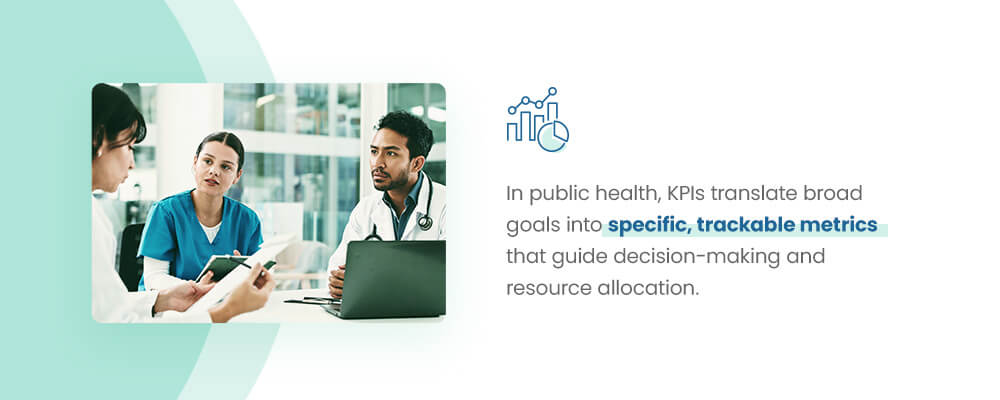
Key performance indicators provide health departments with measurable benchmarks that reveal whether community health initiatives achieve their intended impact. In public health, KPIs translate broad goals into specific, trackable metrics that guide decision-making and resource allocation.
Public health KPIs include disease incidence rates, which track how often specific conditions occur within a population over time. Vaccination rates measure immunization coverage across different age groups and demographics, helping departments identify gaps in preventive care. Mortality rates offer insights into leading causes of death and prioritize lifesaving interventions. Other essential health department performance metrics include hospitalization rates for preventable conditions, screening participation rates for early disease detection and behavioral indicators like smoking prevalence or physical activity levels.
These metrics work together to create a comprehensive picture of community health status. Consistent KPI tracking allows departments to spot emerging health threats early, evaluate which programs deliver consistent results and demonstrate accountability to stakeholders and community members. Effective KPI selection requires understanding your community’s unique health challenges and aligning measurements with immediate program goals and long-term strategic priorities.
The Value of Data Tracking in Public Health
Strategic planning in public health relies on a continuous feedback loop between data collection, analysis and program refinement.
Data tracking is the backbone of effective public health planning and execution. The process begins with systematic data collection from multiple sources, such as hospitals, clinics, laboratories, schools and community surveys. Health departments then organize this information through data management systems that standardize formats, eliminate duplicates and ensure accuracy.
Analysis transforms raw data into actionable insights. Public health teams examine trends over time, comparing outcomes across different neighborhoods or demographic groups and identifying factors that contribute to health disparities. This analysis reveals which health initiative tracking efforts produce measurable improvements and which strategies need adjustment.
Consider these benefits of public health planning anchored in robust data tracking.
- Preventing disease and injury: Early warning systems detect outbreaks before they spread, while trend analysis identifies rising risk factors that demand preventive action.
- Improving health equity: Data broken down by demographics exposes disparities in health outcomes, guiding targeted interventions for underserved populations.
- Efficient resource allocation: Performance data shows which programs deliver the strongest return on investment, helping departments direct limited resources where they’ll have the greatest impact.
- Promoting healthier environments: Tracking environmental health indicators helps departments address pollution, food access and other community conditions that shape health outcomes.
- Evidence-based decision-making: Solid data gives public health leaders confidence to advocate for policy changes and program expansions that genuinely improve community well-being.
The Centers for Disease Control and Prevention provide frameworks that help health departments structure their data tracking efforts around program priorities and evidence-based interventions. These resources offer guidance on which metrics matter most and how to collect them consistently across different communities.
Measuring Progress on Public Health Initiatives
Health departments use several complementary methods to measure how their initiatives perform. The most effective measurement strategies combine multiple data sources to create a complete view of health outcomes and the factors that influence them.
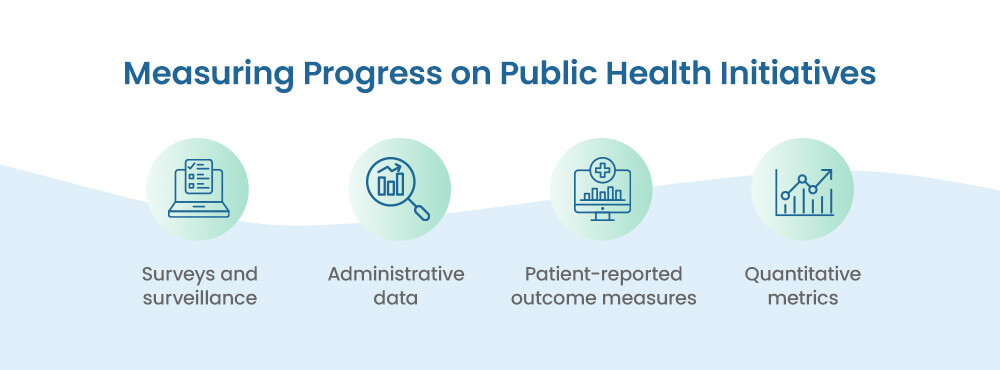
- Surveys and surveillance: Surveys and surveillance systems provide ongoing monitoring of population health trends. Population health surveys gather self-reported information about health behaviors, access to care and quality of life across communities. Behavioral risk factor surveys track habits that influence long-term health outcomes, including diet, exercise and substance use. Disease registries maintain detailed records of specific conditions, enabling departments to monitor treatment patterns and survival rates for chronic diseases and other health concerns.
- Administrative data: Administrative data offers another valuable measurement tool. Electronic health records contain clinical information that reveals diagnosis patterns, treatment effectiveness and care quality across healthcare systems. Billing claims data shows which services patients receive and how often, helping departments identify gaps in preventive care.
- Patient-reported outcome measures: PROMs capture the patient perspective through surveys that measure health-related quality of life and patient experiences with care. These subjective measures complement clinical data by revealing how health conditions affect daily functioning and well-being.
- Quantitative metrics: Quantitative metrics round out the community health outcomes measurement toolkit. Mortality and morbidity statistics track deaths and disease burden across populations. Health behavior metrics monitor factors like tobacco use, physical activity levels and nutrition habits that predict future health outcomes. Quality-of-life indicators measure factors that contribute to well-being, including social connections, economic stability and environmental conditions.
The CDC offers a comprehensive assessment framework and tools that help health departments select appropriate measurement methods and implement them consistently.
Data Tracking Tools and Technologies
Effective data tracking depends on technologies that simplify reporting, reduce manual work and reveal valuable insights.
- Integrated data platforms: Modern strategic planning software brings multiple data sources into a single, unified system. These platforms provide real-time visibility into program performance and population health trends, eliminating the delays of manual reporting.
- Interactive dashboards: Think of these as command centers for public health operations. Visual charts and graphs make complex metrics easy to interpret, allowing leaders to monitor vaccination progress, track outbreaks and assess program reach across different populations. This at-a-glance insight supports faster responses to emerging issues.
- EHR integration: Electronic health records supply clinical data that suggest patterns in diagnosis, treatment and outcomes across communities. Integration helps departments identify care gaps, understand which interventions work best and reduce reporting burdens through automated data submissions.
- Public health workflow automation: Specialized software connects disparate data sources and streamlines reporting processes. Automated reminders, centralized updates and performance alerts reduce staff workload and ensure accountability across multiprogram initiatives.
- Geographic information systems: GIS tools add spatial analysis to public health planning. Mapping health outcomes, environmental factors and demographic patterns helps departments target interventions where they will have maximum impact.
Integrated digital tools provide clarity, accountability and speed that manual processes can’t match. Health agencies can spend less time gathering information and more time improving community wellness by automating data collection and connecting program performance across departments. The CDC offers guidance on selecting appropriate technologies for community health assessments and benchmarking.
Challenges in Tracking Community Health Outcomes
Despite the self-evident benefits of systematic tracking, health departments encounter significant obstacles that complicate their efforts to monitor and improve community health outcomes.
- Data silos: Health information often lives in disconnected systems across hospitals, clinics, laboratories, schools and social service agencies. Each organization uses different software platforms and data formats, making it difficult to create a unified view of community health status. Data trapped in separate locations causes officials to miss connections between risk factors and outcomes that could guide more effective interventions.
- Privacy concerns: Privacy concerns create necessary but complex constraints on health data sharing. Regulations protecting patient confidentiality require careful protocols for data access, storage and transmission. Balancing the need for comprehensive health information with individuals’ privacy rights demands robust security measures and clear data governance policies.
- Resource limitations: Resource limitations affect technology investments and staffing capacity. Many health departments operate on tight budgets that make it challenging to implement modern data systems or hire analysts with specialized skills in public health informatics. Smaller departments particularly struggle to maintain sophisticated tracking infrastructure.
- Lack of standardization: Lack of standardization across data collection methods hampers comparison and analysis. Aggregating information becomes time-consuming and error-prone when providers use varying definitions, measurement tools or reporting schedules. Public health compliance strategies work best when all partners follow consistent data standards.
- Public trust: Trust and participation challenges emerge when communities have historical reasons to distrust public health institutions. Building the community partnerships necessary for accurate data collection requires ongoing engagement, cultural sensitivity and demonstrated commitment to using health information for community benefit rather than surveillance.
Solutions exist for each of these barriers. Technology adoption eliminates data silos through integration platforms that connect disparate systems. Process improvements like standardized data dictionaries and shared collection protocols increase consistency. Collaborative approaches that engage community members as partners rather than data sources build trust and improve participation.
Case Studies — Effective Tracking in Action
Real-world examples demonstrate how systematic tracking transforms public health execution and delivers measurable community improvements. Organizations that prioritize data-driven decision-making consistently outperform those relying on intuition alone when achieving their community health goals.
Health departments across multiple sectors have implemented integrated tracking systems that connect their strategic initiatives and provide continuous visibility into program performance. These organizations report significant improvements in their ability to monitor progress, identify challenges early and adjust strategies based on real-time data.
For example, the Oldham County Health Department Community Health Dashboard empowers both agency staff and community members to monitor health improvement goals and key metrics as they evolve. This dashboard increases internal accountability — and grants the general public instant access to measures like chronic disease prevalence, vaccination rates and progress toward health equity goals. Transparent, easy-to-read displays foster an environment of openness, which is crucial for both stakeholder buy-in and community engagement.
Similarly, the Regional Health Transformation Partnership (RHTP) Dashboard for the Delaware Department of Health & Social Services showcases prioritized population health outcomes across several major focus areas. The dashboard tracks collaborative progress on everything from maternal and child health to chronic condition management. By making these KPIs public, the RHTP enables all partners, including community organizations and healthcare systems, to align their efforts and stay focused on shared targets.
Another timely example is the Yamhill County Public Health Suicide Prevention Dashboard. This tool is a critical part of the county’s work to reduce suicides and support behavioral health. The dashboard offers up-to-date data on initiatives, risk factors, intervention activities and progress toward prevention goals. Open access to such sensitive public health measurements helps demystify local mental health challenges and reassures the public that real, evidence-based work is underway.
What Successful Tracking Methods Have in Common
Shifting from manual spreadsheet tracking to automated platforms frees staff time for analysis and strategic planning rather than data collection. Organizations using these approaches consistently achieve higher rates of initiative completion and stronger outcomes on their priority health metrics.
Customer stories across public health illustrate the concrete benefits of robust tracking systems. Departments that invest in systematic performance management report better alignment across programs, more robust accountability and an improved ability to demonstrate impact to funding agencies and community stakeholders.
Research on community-engaged approaches shows that involving citizens throughout the tracking process builds trust, improves data quality and increases the likelihood that findings lead to meaningful interventions. As residents observe health departments using tracking data to address their most pressing concerns, their participation in surveys and programs may increase.
The most successful tracking implementations share common characteristics — metrics aligned with strategic priorities, automated systems that reduce manual effort, regular review of performance data by leadership teams and flexibility to adjust strategies when results indicate change is necessary. These practices transform tracking from a compliance exercise into a strategic tool that drives continuous improvement in community health outcomes.
Transform Your Community Health Strategy With AchieveIt

Effectively tracking community health outcomes requires a combination of strategic metrics, consistent processes and technology that connects your initiatives. Health departments that implement systematic tracking systems gain the visibility and accountability needed to drive meaningful community health improvements.
Organizations with ambitious goals rely on AchieveIt to get an integrated view of their initiatives and accomplish them with expert help. Your health department can partner with us to connect, manage and execute plans and initiatives. Automate update requests, eliminate manual chasing and create real-time dashboards that show how your public health strategies perform at any moment. Spend less time collecting updates and more time making decisions that move your community forward.
Ready to see how AchieveIt can strengthen your public health execution? Request a demo today to explore how the platform supports health departments in delivering better community outcomes. Take a self-guided product tour to see firsthand what it’s like to execute your plans inside AchieveIt.