
Essential Clinical, Operational, and Financial KPIs
In today’s ever-changing healthcare environment, organizational leaders must be more knowledgeable than ever if they want to enhance execution and drive results. This requires a true understanding of the terms and hierarchies involved in the planning and structuring of their organizations.
This guide is designed to walk you through this process in a straightforward manner. Filled with explanations, practical examples, and useful information on how to distinguish between a business process and a service line or a KPI from a strategic plan initiative, you will be better prepared to lead all of your strategic initiatives and start seeing results with this by your side.
In this guide, you will learn:
- The definition of core competencies
- The meaning of the term ‘key business processes’
- The reasons business processes are separate from service lines
- How key performance indicators help you manage your business processes
- The differences between key performance indicators and strategic plan objectives
- How to use dashboards and scorecards to track performance
- Example business processes and KPIs that hospitals use

The Definitive Guide to Healthcare KPIs
Core Competencies
Understanding an organization’s core competencies is becoming more important in healthcare, as it not only helps the organization bridge the gap between goals/objectives and strategies and tactics, but it is also required by Baldrige for those seeking the prestigious quality award.
According to Hamel and Prahalad (1990), a core competency is something that an organization can do well and that meets the following three conditions:
- Provides customer benefits.
- Is hard for competitors to imitate.
- Can be leveraged widely for many products and markets.
A core competency can take various forms, including technical/subject matter expertise (e.g., subspecialty care not easily duplicated in the marketplace), reliable processes (e.g., the ability to treat emergency department patients within 15 minutes or less), and/ or close relationships with physicians, community leaders, or philanthropists. However, core competencies may also include the development of new services (executive health facilities, alternative therapies, etc.) or culture (employee dedication, loyalty, etc.).
Modern business theories suggest that most activities that are not part of an organization’s core competency should be outsourced. If a core competency yields a long-term advantage to the organization, it is said to be a sustainable competitive advantage.
Key Business Processes
A business process is a collection of interrelated tasks that solve a particular issue. There are three types of business processes:
- Management Processes. The processes that govern the operation of a system. Typical management processes include corporate governance and strategic management.
- Operational Processes. The processes that constitute the core business and create the primary value stream. In a manufacturing organization, typical operational processes are purchasing, manufacturing, marketing, and sales. In a healthcare organization, typical operational processes include elements of the patient care process and components of the revenue cycle.
- Supporting Processes. The processes that support the core operational processes. Typical support processes include accounting, recruitment, and information technology.
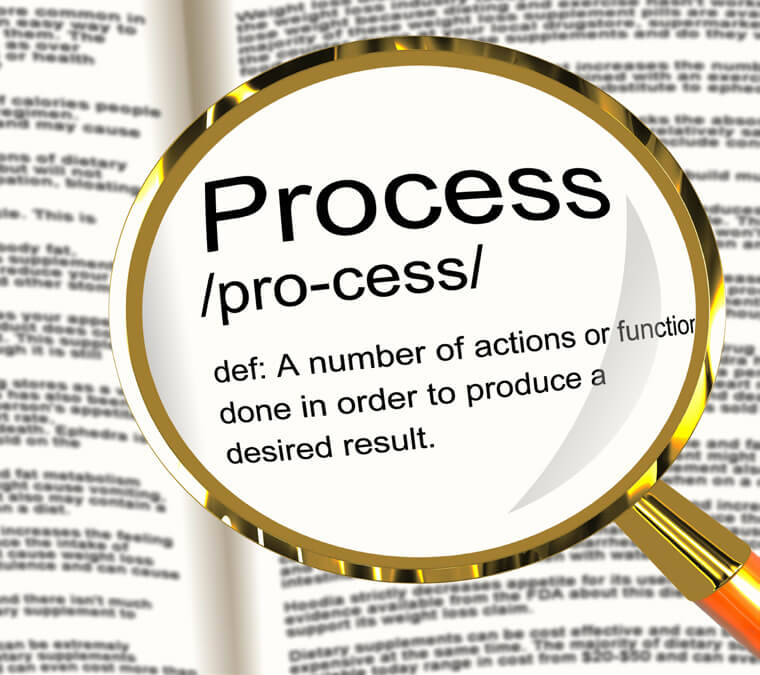
A business process can be broken down into several sub-processes, which have their own attributes, but also contribute to the goal of the super-process. The analysis of business processes typically includes the mapping of processes and sub-processes down to the task level.
Business processes have the following characteristics:
- DEFINABILITY: It must have clearly defined boundaries, inputs, and outputs.
- ORDER: It must consist of activities that are ordered according to their position in time and space.
- CUSTOMER: There must be a recipient of the process outcomes.
- VALUE ADDING: The transformation that takes place within the process must add value to the recipient, either upstream or downstream.
- EMBEDDEDNESS: A process cannot exist in itself; it must be embedded in an organizational structure.
- CROSS-FUNCTIONALITY: A process can regularly span several functions, although this is not a requirement. Business processes are not the same as product or service lines. In fact, business processes will cut across the many product or service lines an organization offers.
KBPS and Service Lines
Product or service lines are a way of organizing the organization to support the strategic plan. A hospital can expand or contract its service lines: opening a children’s hospital, spinning off its primary care physician network, closing its rehab hospital, or launching a trauma program. While the service lines can change, the business processes that support the service lines do not.
The business processes required of a cardiovascular service line are identical to the business processes required to support an orthopedic service line. If the hospital elects to close its orthopedics program, the same business processes are still required for the cardiovascular service line.
What’s more, service lines do not meet three of the standard business process characteristics outlined in the last section. Most service lines do not have clearly defined boundaries (definability). For instance, some patients enter through an ambulatory environment, others through outpatient services, while others enter through inpatient services. In addition, there are a myriad of beginning and ending boundaries for each service line, and the service lines themselves do not consist of ordered activities (order). Finally, although a business process cannot exist in itself (embeddedness), companies such as Medcath (heart hospitals) and US Oncology (outpatient cancer services) have demonstrated that service lines are capable of standing alone.
Key Business Processes (KBPs) are those management and operational processes that can cripple an organization if the processes do not function well. For the cereal organization, the five business processes provided in the first example above are all key business processes, and if any of them fail, the organization’s ability to compete is severely hampered. A further differentiator between key business processes and service lines is that the same cannot be said of service lines.
While the failure of a key business process could bring an organization to its knees, the failure of a product or service line is unlikely to do so.
In recent years, many hospitals closed their inpatient psychiatric units because the service line was unprofitable. While the losses associated with the service line were eliminated, the key business processes that supported the service line were not. In fact, in many cases, the beds that supported the inpatient psychiatric program were used to expand other, more profitable service lines, requiring the key business processes to continue to operate effectively and efficiently.
Key Performance Indicators
Key Performance Indicators (KPIs) are financial and non-financial metrics used to measure key business processes, which ultimately reflect the strategic performance of an organization. KPIs are used in business intelligence to assess the present state of the business and to prescribe a course of action. They help an organization measure performance by providing ongoing and regular monitoring of the key business processes. The act of monitoring KPIs in real-time is known as “business activity monitoring.”
KPIs are frequently used to “value” difficult-to-measure activities, such as the benefits of leadership development, engagement, service, and satisfaction.
They are typically tied to an organization’s strategy (as exemplified through techniques such as the Balanced Scorecard) and key business processes.
Practical Example: Emergency Room |
|---|
ABC Hospital sets the upper specification limit for its door-to-MSE for its emergency department at 15 minutes. They also set their KPI target as 95%. This means that 95% of the time, the door-to-MSE time will be 15 minutes or less. The hospital then sets an action plan in case it does not meet this goal. Their plan states when action will be taken (when the KPI target drops below 95% for some period of time), who takes action (the emergency department clinical nurse manager), what action is taken (a PDSA event is launched immediately), the timeframe for taking action (one week), and who in the organization should receive reports (the CEO, CNO, COO, and CMO). |


Use Dashboards and scorecards to track performance
Key performance indicators can get unwieldy if you don’t have a way to successfully track and report results. All too often, organizations create elaborate spreadsheets with scores of rows down the side and a dozen columns across the top to track month-by-month results that are color-coded to illustrate when a KPI has been in or out of compliance. The result is a mishmash of colors that makes it difficult to understand trends or current performance
Today, more cloud-based software applications exist that allow you to track your KPIs more effectively and efficiently than ever before.
If you decide to move in this direction, here are some things to consider when evaluating various cloud-based tools:
- Does the application integrate with our strategic plan so that we can display plan performance alongside KPI performance?
- Do the dashboards show trends over time?
- Can I easily create and manage dashboards?
- If one or more KPIs go outside of compliance, does the application automatically send notification alerts?
- Can I allow everyone in my organization to view our dashboards without incurring additional costs?
- Can I easily upload my dashboard data, or even automatically feed the application from our various databases?
Typical Hospital KBPs and KPIS
Below is a non-exhaustive list of potential business process KPIs:
Outpatient Flow
- CMS outpatient measures
- Compliance with care coordination pathways
- Cost per outpatient episode
- No-show rate
- Patient satisfaction
Emergency Flow
- CMS core measures
- Number of diversions
- Total patient throughput time—patients not
admitted - Total throughput time—patients admitted
- Time from door- to medical screening
- Percent of patients left without being seen
- Cost per visit
- Patient satisfaction
Inpatient Flow
- Inpatient raw mortality rate
- CMS core measures
- Harm events per 1,000 patient days
- Bed turnover
- Readmission rate
- Occupancy rate
- Average length of stay
- Average cost per discharge
- Patient satisfaction
General Management
- Percentage of managers with clinical degrees
- Employee satisfaction
- Employee retention
RecordKeeping
- Percentage of patients with documented medical plans
- Percentage of duplicate medical records
- Percentage of patients accessing records through an online channel
Surgical Services
- Surgical mortality rate
- Surgical infection rate
- Compliance with care coordination paths
- Surgical complication rate
- OR utilization rate
- Cost per surgical procedure
- Surgical expenses
- OR cancellations less than 48 hours
- First-case on-time starts
- Room turnover time
Medications Management
- Adverse drug events per 1,000 patient days
- Medication errors per 1,000 patient days
- High-risk adverse drug events per 1,000 doses
- Percent of unreconciled medications
- Number of self-reported medication errors
- Compliance with drug monitoring protocols
- Total cost of formulary
Revenue Cycle
- Total operating margin
- A/R days due to coding
- Total A/R days outstanding
- Total A/P days outstanding
- Cash receipt to bad debt
- Claims denial rate
- Days of cash on hand
Access Management
- Annual volume of transfers approved
- Annual volume of transfers cancelled
- Elapsed time from initiated to completed request
- Elapsed time from bed request initiated to completed request
- Timeliness of bed assignments to transferring facilities

What It All Means
While KPIs, KBPs, and service lines have a lot in common, it is important to remember that at their heart, they are all different. In order to efficiently and effectively run your hospital, you need to make sure that what you are calling a business process or KPI actually is one.
Remember that there are three main types of business processes: management, operational, and supporting. All of them should meet the necessary requirements.
That means they should be
- Definable
- Easily orderable
- Customer-driven
- Value-Adding
- Embedded in the organization
- Cross-functional
A service line is a way to organize the organization in order to better support the strategic plan. It is important to recall that a business process should span the entire business. If it only applies to one service line, then it is not one of your KBPs.
Searching for a Technology Solution |
|---|
When you are ready to automate these functions, make sure you have the right technology. Look for all of the following:
|
On the other hand, KPIs are actual metrics that you use in order to effectively track your business processes. Finally, recollect that dashboards and scorecards help you keep track of all of these important issues.
What it all boils down to is this: it is critically important to have the right people and processes in place not only to drive towards operational excellence, but also to ensure they are effectively utilizing the right technology to automate many of the data collection and reporting challenges they face – providing a single source of truth regardless of the KBP, KPI, operational or strategic initiative.

AchieveIt is one such platform. It is purpose-built to help healthcare organizations track progress against their most important initiatives, drive alignment with enhanced visibility and real-time dashboard reporting, and increase efficiency by automating many of the data collection activities that require painstaking manual effort.
This is what we do best: help healthcare organizations like yours become faster, smarter, and better by aligning your organization, teams, and individuals around the initiatives that really matter.
About AchieveIt™
AchieveIt is a software provider that empowers leaders with the tools required to align team performance around the strategic initiatives that drive real results. Our industry-leading AchieveIt™ Execution Management Platform is a cloud-based solution designed to provide leaders with top-down visibility into strategic plans, corporate initiatives, and day-to-day activities that support your business goals.
AchieveIt is transforming how organizations plan, collaborate, manage, achieve results, and get things done -- all from a single platform. Founded in 2010 and headquartered in Atlanta, GA, AchieveIt serves clients from the Fortune 500 to the mid-market, and across a wide range of industries.