
The pace of change in business has never been greater. Markets shift rapidly, competitors move faster and disruption is constant. Traditional approaches to strategy planning and execution struggle to keep up, leaving organizations exposed to misaligned priorities, wasted resources and missed opportunities.
Strategy execution technology provides the infrastructure to turn plans into measurable outcomes, align resources and maintain visibility and accountability across an organization. It helps enterprises adapt to the future of strategy execution by staying agile and resilient.
Learn why investing in strategy execution technology is imperative for boards and investors. Understand the risks of inertia and how these solutions can help organizations turn strategy into results.
In This Article
- The Escalating Risks of Strategic Inertia
- The Modern Business Environment Demands a New Approach
- How Strategy Execution Technology Drives Value
- Strategy Execution as a Strategic Asset
- AchieveIt as Your Partner in Strategic Excellence
The Escalating Risks of Strategic Inertia
Approximately 60% to 90% of strategic plans fail to fully launch, with poor execution contributing to the failure. Even when organizations get the plan right, how it gets delivered determines success.
With business settings moving faster than ever before, strategic inertia poses a deeper threat than many boards assume. Creating the right strategy remains essential, but even well-designed strategies fail when execution is weak.
Financial Impact of Inaction
When strategic initiatives stall or drift off course, they pose the following implications:
- Lost market share: If your organization takes longer to pivot, redirect resources, or capitalize on emerging opportunities, faster competitors will capture growth and gain a niche advantage. Execution delays mean windows of opportunity close and being second often means being left behind.
- Suboptimal resource allocation: Strategic plans cost time and money. When execution is misaligned, initiatives may proceed without proper connection to priorities, resulting in sunk costs in low-return activities. This diverts resources from higher-impact work and limits growth potential.
- Failure to capitalize on emerging opportunities: In dynamic markets, timing matters. A weak execution engine means teams cannot mobilize fast enough, so by the time leadership approves a critical initiative, the market has already moved, the customer need has changed or the regulatory window has shifted.
- Decreased shareholder trust: Boards and investors expect strategic initiatives to drive growth, margin improvements or market expansion. When initiatives underdeliver or fail, confidence diminishes, and valuations may reflect increased execution risk.
- Increased cost of change: The longer execution takes or the more fragmented it is, the more expensive it becomes to course correct. Re-work, additional staffing, and technology remediation add cost and hinder performance.
Nonfinancial Impact of Inaction
Beyond line items and metrics, weak execution affects organizational operations and credibility. Consequences include:
- Erosion of employee morale and engagement: When teams repeatedly see initiatives launched and announced, only to go quiet or fail due to poor follow-through, trust in leadership declines. Engagement, innovation and strategy execution may suffer.
- Damage to reputation and investor confidence: Stakeholders, including investors and customers, judge organizations by results. Consistently unmet strategic objectives weaken credibility and reduce the latitude boards and executives have to pursue ambitious initiatives.
- Inability to respond to change: Execution inertia limits agility. Organizations become reactive, struggling to respond to market shifts, technological disruptions or regulatory changes.
- Loss of competitive edge: Even well-resourced and thoughtfully designed strategies fail if execution lags. Competitors with good enough execution may outperform organizations with perfect plans that teams poorly execute.
The Modern Business Environment Demands a New Approach
The world of business has become more volatile and unpredictable. Leaders must navigate environments defined by volatility, uncertainty, complexity and ambiguity (VUCA), and brittle, anxious, nonlinear and incomprehensible (BANI) conditions.
These frameworks describe the daily operational reality for most organizations:
- Volatility reflects how rapidly markets shift.
- Uncertainty represents the limits of forecasting in an era of disrupted supply chains and emergent technologies.
- Complexity arises from the sheer number of variables influencing business decisions.
- Ambiguity may lead to decision fatigue.
BANI takes this concept further. Systems may appear stable until they suddenly fracture, producing anxiety and overreaction. Relationships between variables are nonlinear and often incomprehensible until after the outcomes occur.
In such an environment, traditional annual planning cycles fall short. Setting a plan once a year assumes predictability and static conditions. By the time an annual strategy review arrives, markets have likely shifted, priorities have changed and execution may have drifted from alignment. Modern organizations require a system that embeds adaptability, visibility and alignment into the strategy process.
Digital Transformation as a Driver
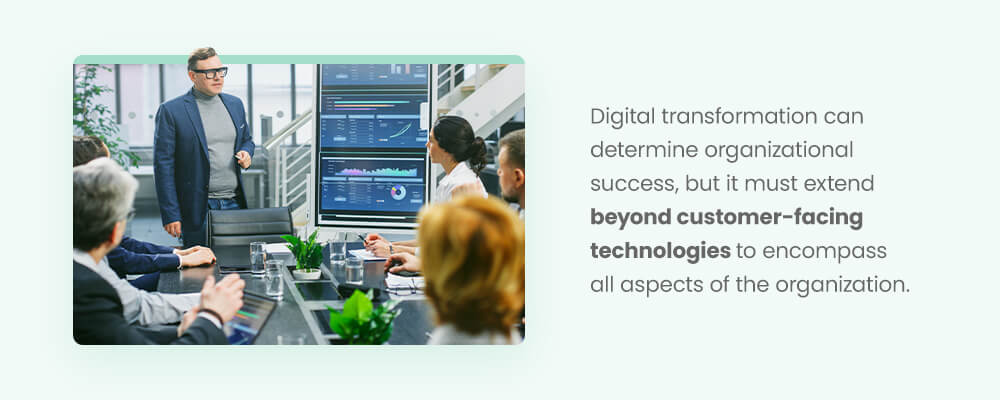
Digital transformation can determine organizational success, but it must extend beyond customer-facing technologies to encompass all aspects of the organization. While some companies have invested in digitizing customer experience and operations, they may not have digitized how they manage and execute strategy.
This oversight creates an imbalance. An organization may be technologically advanced externally with automated systems, yet still manage its strategic portfolio through spreadsheets and manual reporting. This approach may result in agile operations, but it can lead to slow strategy execution.
Extending digital transformation to strategy execution closes this gap. Integrated execution platforms allow organizations to connect strategic intent with operational data in real time, ensuring that decisions are based on live insights. This shift may improve efficiency and modernize the way leadership governs the enterprise.
Increased Stakeholder Expectations
Another factor driving change is the rise of stakeholder accountability. Boards, investors and employees expect transparency and demonstrable outcomes from strategy execution:
- Investors want clear evidence that strategic initiatives are delivering value.
- Boards want assurance that organizations identify and mitigate risks.
- Employees want to understand how their work contributes to the organization’s overarching goals.
- Regulators and partners also demand traceability.
This shift has redefined what constitutes good governance, so organizations should consider systems that provide clarity and evidence. Progressive organizations treat transparency as a performance asset and rely on execution platforms that make progress visible, data credible and accountability shared across the enterprise.
Data Overload and the Need for Insight
As organizations digitize more processes, they may find that the volume of available data outpaces their ability to interpret it. Decision-makers deal with reports and performance metrics from multiple systems, resulting in data overload. Teams may spend more time consolidating information than acting on it.
Additionally, reports may be outdated by the time they reach leadership, which blurs the connection between strategic goals and real-world performance. This information gap slows decision-making and creates uncertainty about where to focus.
Integrated strategy execution platforms aggregate key metrics, milestones and risk indicators in a single environment. Leadership can analyze trends and focus on important projects.
Agility as the New Currency
Agility has become the defining capability for competitive advantage. Success depends on the ability to pivot quickly, reallocate resources and seize emerging opportunities. Execution speed and adaptability determine whether a brilliant idea delivers real impact.
Agile strategy management tools provide real-time visibility into progress and performance. Leadership can identify gaps, adjust priorities and redeploy resources immediately. Cultural agility also grows when teams see transparent connections between their work and strategic outcomes and when adjustments are part of normal operations.
How Strategy Execution Technology Drives Value
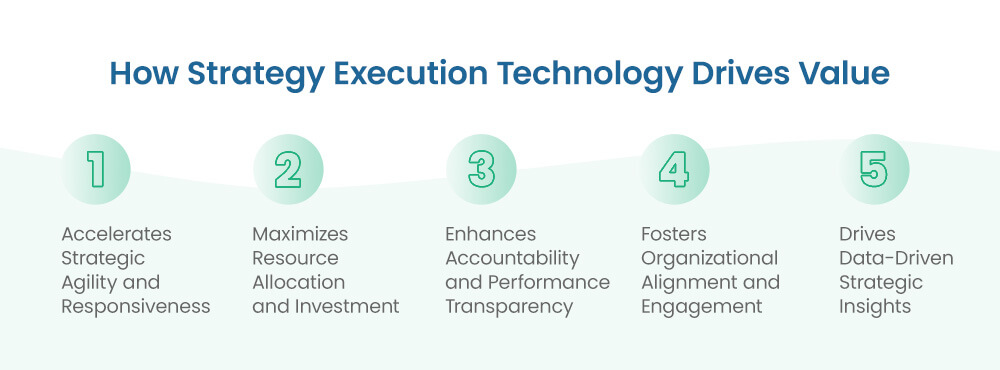
Organizations may invest in creating detailed plans, but without disciplined follow-through, those strategies remain aspirational. Explore how execution technology supports ideation to deliver results.
1. Accelerates Strategic Agility and Responsiveness
The ability to respond swiftly to change can be a competitive advantage. Real-time visibility into initiative progress allows leaders to identify delays, adjust priorities, reallocate resources and act on emerging opportunities. Organizations that use competitive advantage strategy execution software create an adaptive, flexible and aligned culture. Execution technology turns strategy into a decision-making framework that keeps pace with business dynamics.
2. Maximizes Resource Allocation and Investment
Without clarity on resource deployment, organizations risk allocating them to low-impact initiatives. Effective strategy execution ensures organizations redirect resources where they create the greatest value. Continuous monitoring and prioritization reduce duplication and align investment with strategic objectives. This disciplined allocation can enhance returns and strengthen organizational capacity for upcoming initiatives.
3. Enhances Accountability and Performance Transparency
Clear ownership of initiatives and visible progress support accountability. Teams understand their responsibilities, leadership can track delivery, and expectations are aligned across the organization.
Transparency fosters trust. Shareholders operate with an understanding of where the organization stands, which helps reinforce confidence in decision-making and embed a culture of shared responsibility.
4. Fosters Organizational Alignment and Engagement
Execution succeeds when every individual’s work connects to broader organizational priorities. Linking team and personal objectives to strategic goals gives employees a clear sense of purpose and relevance in their daily contributions. This alignment increases engagement and ensures that efforts across the enterprise are coordinated and focused. The organization moves with cohesion, which can accelerate progress and improve morale simultaneously.
5. Drives Data-Driven Strategic Insights
Reviewing outcomes across initiatives allows leaders to identify and refine patterns. It turns experience into organizational intelligence, ensuring that each project contributes to predictable performance. This process creates a learning loop that enables organizations to enhance their adaptability and the quality of their decision-making.
Strategy Execution as a Strategic Asset
In some organizations, executives and boards may focus on a technology’s price rather than the opportunity it provides. The same applies to strategy execution technology.
Just as enterprise resource planning (ERP) systems became essential for managing operations and customer relationship management (CRM) systems for managing customers, a strategic execution platform is a necessity to govern business performance.
Treating execution technology as infrastructure can turn its perceived value into strategy enablement. The platform helps convert plans into measurable outcomes, align resources efficiently and track progress with clarity.
Long-term Value
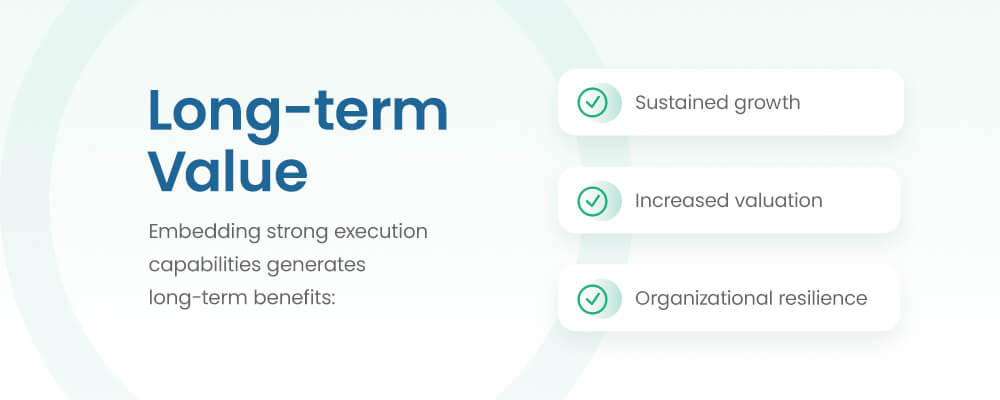
Embedding strong execution capabilities generates long-term benefits:
- Sustained growth: Organizations that execute consistently can deliver on strategic initiatives more reliably. This strengthens market position and allows leaders to invest in innovation and expansion.
- Increased valuation: Measurable execution enhances investor confidence. Reliable performance reduces risk perception, strengthens trust and supports higher valuation.
- Organizational resilience: Integrated execution capabilities allow organizations to respond to disruptions. Teams can identify risks early, deploy resources efficiently and make strategic adjustments in real time.
Risk Mitigation
Strategy execution platforms also serve as a proactive risk management tool. By providing clear visibility into every initiative, organizations can:
- Identify potential delays or misalignment.
- Ensure that resources are allocated to priority projects.
- Maintain confidence among stakeholders
AchieveIt as Your Partner in Strategic Excellence
AchieveIt is software for connecting strategy to results. It helps stakeholders across multiple sectors, including health departments, higher education and governments, combine initiatives, align teams and provide visibility into progress and risks. AchieveIt’s architecture delivers tangible value for those overseeing strategy execution.
Real-Time Visibility and Reporting
From the moment you deploy AchieveIt, you’re able to shift from fragmented spreadsheets and inconsistent updates to a single source of truth. The platform automates manual processes related to update collection and reporting, so leaders have a clear view of what’s happening. Decision-makers gain clarity in real time by streamlining data flow.
Cascading Objectives
Another execution challenge is ensuring that the strategic goals translate into clear initiatives, ownership, timelines and tracking. AchieveIt supports this by enabling cascading objectives and initiatives, linking strategic goals to department, team and individual actions. Alignment ensures that everyone is aware of their responsibilities and understands the significance of their actions. Leadership can monitor progress through a single platform rather than compiling disparate reports.
Addresses Board-Level and Investor Concerns
For boards and investors, the concerns often center on governance, risk visibility and resource efficiency. AchieveIt addresses these through:
- Dashboards tailored for executive review and board use.
- A design that supports large organizations with complex plans and multiple stakeholders.
Integration and Data Connectivity
AchieveIt integrates with business tools and systems, which allows data to flow efficiently across an organization. This integration capability ensures that leadership decisions are based on current data. It also reduces administrative burden by providing teams with a unified view of performance.
Customer Support and Training
The platform features dedicated customer success and strategy consulting teams that work closely with organizations to embed execution discipline and maximize adoption. Customers receive personalized onboarding, user training and ongoing optimization support. The consulting team helps turn strategic plans into actionable frameworks.
Data Security
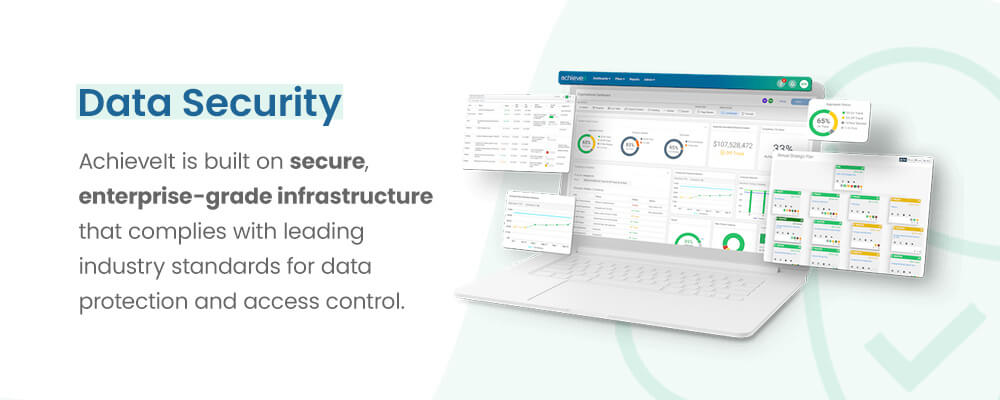
AchieveIt is built on secure, enterprise-grade infrastructure that complies with leading industry standards for data protection and access control. The platform supports governance and audit requirements while maintaining the flexibility needed for collaboration across departments or partner organizations. Boards and investors benefit from verifiable and traceable reporting within a secure environment.
Request an Investor and Board Approval Strategy Software Demo
Our platform combines execution software with expert services, including strategy consulting, plan optimization and performance management.
Our software provides scalability, enterprise-grade security and customizable dashboards to make performance transparent and decisions data-driven.
Request a demo of the investor value strategy execution software or take a self-guided tour to see what it’s like to execute your plans inside AchieveIt.